
Investing podcasts worth your time
There are thousands of investing podcasts and very few hosted by anyone with a track record. These six clear that bar, and they are worth more than the rest combined.
What makes an investing podcast worth an hour of your time?
The same test as a book. Has the host, or the guest, actually compounded capital over a long period in public. Investing podcasts are cheap to make and there are thousands of them, most hosted by people whose skill is broadcasting rather than allocating. The seven below survive that filter, either because the host runs real money or because they consistently book people who do.
The asymmetry is worth stating plainly. A bad book costs you a few hours and some money. A bad podcast, listened to weekly, quietly shapes how you think about risk for years. Choosing the input carefully is not snobbery, it is risk management.
Which investing podcast should I start with?
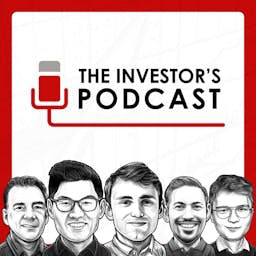
We Study Billionaires, and specifically the episodes hosted by William Green. Green wrote Richer, Wiser, Happier and spent years interviewing the best investors alive, so he asks the question after the obvious one. If you want a single episode to judge the format by, pick any of his conversations with a fund manager you already respect and listen to how he presses on temperament rather than positions.
- We Study Billionaires from The Investor's Podcast Network. A rotating cast of hosts including Stig Brodersen and William Green. Look for the Green episodes in particular.
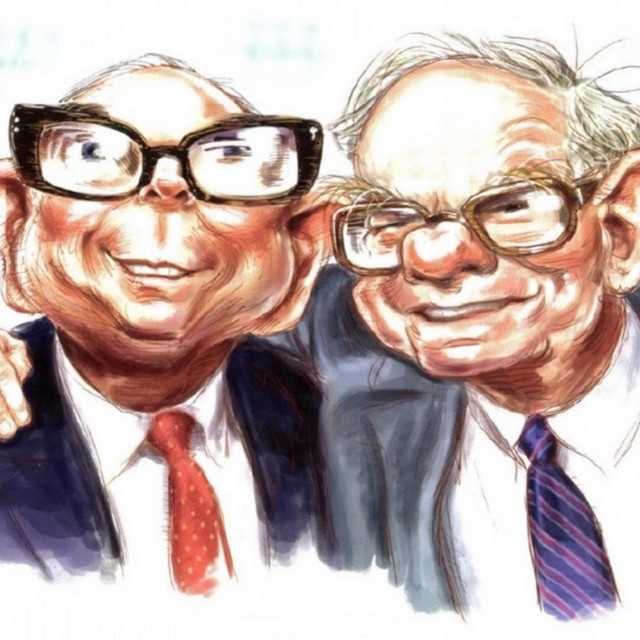
Where can I listen to Buffett and Munger themselves?
There is a feed carrying the Berkshire Hathaway annual shareholder meetings going back to 1994. It is not a podcast in the usual sense, it is the primary source: six hours a year of Buffett and Munger answering unscripted questions, in public, for three decades. No host, no edit, no promotion. If you only listen to one thing on this page, listen to a meeting from a year you remember and see how the reasoning holds up against what actually happened next.
- Berkshire Hathaway Annual Shareholder Meetings from 1994 onwards. Warren Buffett and Charlie Munger, unscripted, for about six hours a year across three decades. Start with a year whose ending you already know, then listen to how they reasoned before it happened.
Which podcasts are hosted by people who actually run money?
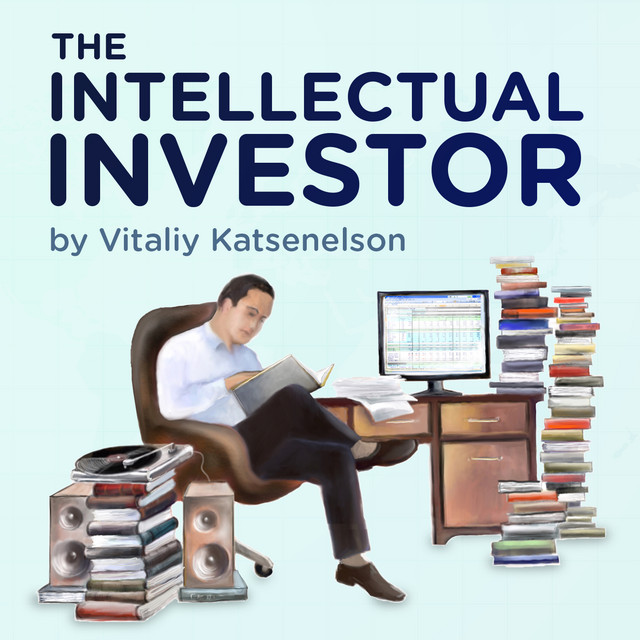
The Intellectual Investor is Vitaliy Katsenelson, who runs Investment Management Associates and writes as well as anyone in the field. In Good Company is Nicolai Tangen, who runs the Norwegian sovereign wealth fund, which means he gets an hour with chief executives that almost nobody else can book. InvestED is Phil Town and his daughter Danielle, working through the Rule Number One method as a conversation between a practitioner and a beginner. Chai with Pabrai is Mohnish Pabrai, who wrote The Dhandho Investor and has compounded capital for decades on a cloned, concentrated approach. Rule Breaker Investing is David Gardner, co-founder of The Motley Fool.
- The Intellectual Investor with Vitaliy Katsenelson. Thoughtful, unhurried, and as much about how to think as about what to buy. He is also very good on what to do in a market that goes sideways for a decade.
- In Good Company with Nicolai Tangen. Tangen runs Norges Bank Investment Management, which owns roughly 1.5% of every listed company in the world. That access gets him candid hours with chief executives you would otherwise only hear in scripted earnings calls.
- InvestED: The Rule #1 Investing Podcast with Phil Town and Danielle Town. The format is a father teaching his daughter, which forces the explanations to stay concrete. Good if you want method rather than commentary.
- Chai with Pabrai with Mohnish Pabrai. Pabrai wrote The Dhandho Investor and has run concentrated positions for decades, so the episodes are unusually direct about position sizing and about being willing to look wrong for a long time. He is also candid about the ones that did not work.
- Rule Breaker Investing with David Gardner, co-founder of The Motley Fool. A growth oriented counterweight to the value tradition in the rest of this list, and useful precisely because it argues the other side.


Are podcasts a good place to find stock ideas?
They are a good place to find questions and a poor place to find conclusions. A guest describing a position has usually held it for months, sized it inside a portfolio you cannot see, and has reasons they are not obliged to disclose. Treat every idea you hear as a starting point for your own underwriting, never as a recommendation. The useful output of a good episode is a way of thinking about a business, not a ticker.
The useful output of a good episode is a way of thinking about a business, not a ticker.
Where do investors actually argue about ideas?
Value Investors Club is the highest signal of the public forums. Membership is limited and write ups have to clear a bar, which shows in the quality of the analysis. Non members can read the ideas on a delay, which is fine if you are reading to learn rather than to trade. Seeking Alpha and The Motley Fool are far broader and far noisier, with a wide quality range, so read them for the counterargument to a thesis you already hold rather than for a thesis to adopt.
- Value Investors Club. Members post full write ups and other members attack them in the comments, which is the part worth reading.
- Seeking Alpha. Enormous range in quality. Best used to find the bear case on something you already like.
- The Motley Fool. Broad coverage and a long public record, though the promotional layer is heavier than on the others.
How should I fit listening into a real research process?
Listening is for building the general model of how good investors think. Research is for a specific company, and it happens in the filings. Keep the two separate. A useful habit is to note the one idea from an episode that changed how you see something, then go and test it against a business you already own. If it does not survive contact with a real balance sheet, it was entertainment.
If you want the reading list built on the same filter, it is in investing books worth your time. And before you act on anything you heard in an episode, write down what would prove you wrong: investment kill criteria covers how.
Show artwork is provided by Spotify and remains the property of each podcast.